
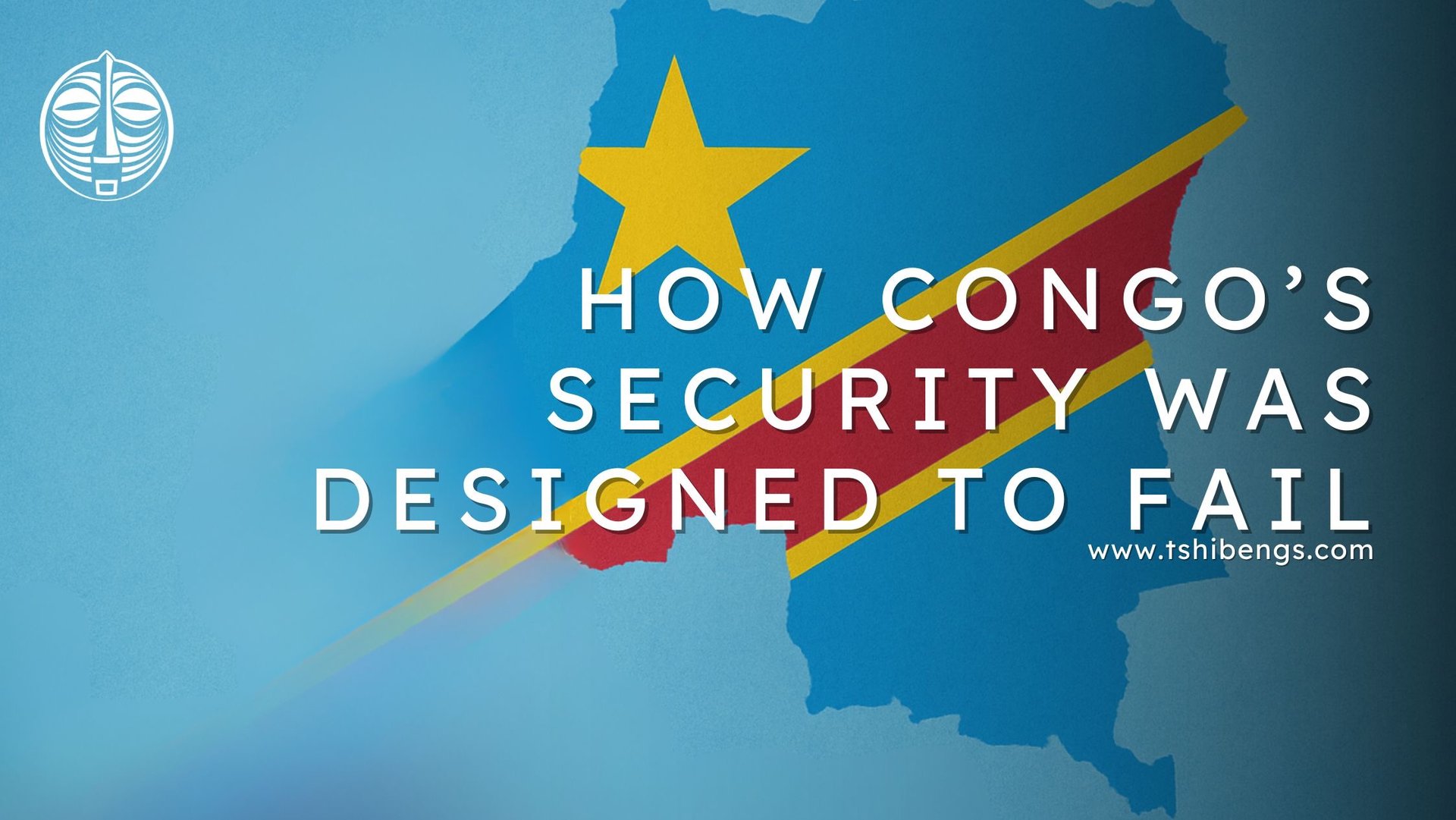
The collapse of Congo’s security system did not begin in the 1990s. It began the moment the colonial state was designed.
In Chapter 2 of The Rise of the Wazalendo, I describe how Congo’s army evolved from a colonial force built to control the population into a Cold War instrument — and finally into a fragmented shell during the Great African War.
To rebuild, we must understand how it broke.
A Colonial Army Against Its Own People
The Force Publique, created under King Leopold II, was not built to defend Congo. It was built to enforce extraction.
Congolese soldiers.
European officers.
Missions: rubber quotas, forced labor, repression.
Between 1885 and 1908, millions of Congolese died under this system. The army’s purpose was clear: protect the colonial project, not the population.
Even as the world moved on and the Belgian Congo entered the mid-20th century, one thing did not change: Congolese were not trained to command.
On the eve of independence in 1960, there were only a handful of Congolese officer cadets. The rest of the officer corps was Belgian.
This was not oversight. It was policy.
Brussels designed the Force Publique to be:
Ethnically fragmented (no more than a quarter of each unit from the same province)
Cut off from the population
Loyal upward to colonial authority, not downward to Congolese society
In other words, it was an instrument against nationhood.
Independence Without Preparation
On 30 June 1960, Congo formally became independent.
Five days later, it exploded.
When the Belgian commander of the Force Publique wrote “Before independence = After independence” on a blackboard, he sent a clear message: nothing would change for African soldiers despite the new flag.
The mutiny was immediate.
Within days:
Garrisons rebelled.
Belgian officers fled.
Civilians were attacked.
Provinces seceded.
Belgium intervened without permission.
Patrice Lumumba was forced to “Africanize” the army overnight: promotions across the board, a change of name, and Joseph-Désiré Mobutu, a former sergeant-major, as Chief of Staff.
This was not institutional reform. It was emergency improvisation.
The result was a fragile army, divided country, and a state already on life support. The Congo Crisis of the 1960s, with approximately 100,000 deaths, was the first sign that security architecture built for colonization cannot sustain independence.
The Cold War’s Favorite Client
In 1965, Mobutu seized power and rebranded the country as Zaire. For the next three decades, he became one of the West’s key allies in Central Africa.
During the Cold War, Zaire played a role: anti-communist bastion. For this, Western powers paid generously:
Military assistance
Budget support
Diplomatic protection
But this support did not build a professional army. It built a regime protection force.
Mobutu’s FAZ (Forces Armées Zaïroises) grew in size but shrank in quality:
“Ghost soldiers” inflated payrolls.
Promotions depended on loyalty and ethnicity, not merit.
Officers turned checkpoints into toll booths.
Military equipment was sold on the black market.
Zaire’s stability was financed — not its sovereignty.
When the Cold War ended, the money dried up. What remained was a hollow structure.
The Great African War — A State on Paper
In 1996, the storm came.
Rwanda, Uganda and their allies invaded, first under Laurent-Désiré Kabila, then against him. Up to nine foreign armies, dozens of rebel movements and countless local militias turned Congo into the battleground of a continent.
Between 1998 and 2003, an estimated 5 million Congolese died — most from disease, hunger and displacement.
In many regions:
Armed groups became local governments.
Foreign troops controlled border posts and mineral zones.
The national army was fragmented, underpaid, and sometimes aligned with one faction or another.
By the time official peace agreements were signed, the Congolese state existed mostly on letterhead.
Security, once centralized in a colonial army, then distorted under Cold War patronage, had now collapsed into a mosaic of militias and foreign forces.
Designed for Control, Not Protection
The common thread is clear:
Under Leopold: army against the people.
Under early independence: army improvisation without preparation.
Under Mobutu: army as regime instrument.
Under war: army as one more faction among many.
At no point was the army fully rebuilt as a national institution serving the Republic above all else.
To move forward, we must finally do what was never done:
Define the security forces as protectors of territory and citizens, not of individuals or external interests.
Professionalize recruitment, training and promotion.
Ensure ethnic balance with a national identity at the core.
Remove foreign and private influence from the chain of command.
History explains how we got here. It does not excuse staying here.
We inherited an army designed for someone else’s project.
We must now build one designed for ours.
Follow me on Social Media
Contacts
+1-470-594-1749
info@tshibengs.com